Sunday, February 10, 2008

And Then There Were Two


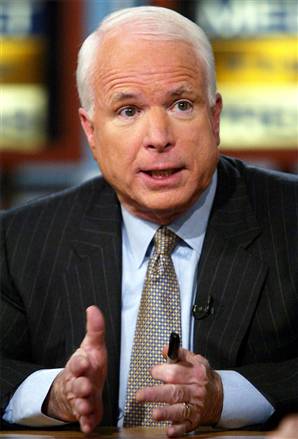
WASHINGTON (CNN) – Mitt Romney ended his presidential run Thursday, telling a conservative audience that continuing the race against rival John McCain would make it more likely Democrats would win the White House — and “in this time of war, I simply cannot let my campaign be a part of aiding a surrender to terror.”


Boos rose from the audience at the mention of McCain’s name – and shocked calls of “no!” as he made his announcement. One young man in a blue sports coat grasped his head in his hands, his mouth wide open as he watched Romney on-stage.


“Barack and Hillary have made their intentions clear regarding Iraq and the war on terror. They would retreat and declare defeat,” said Romney.


“And the consequence of that would be devastating. It would mean attacks on America, launched from safe havens that make Afghanistan under the Taliban look like child’s play. About this, I have no doubt.”


The former Massachusetts governor, who conceded the mathematical odds standing between him and the nomination, told activists gathered for the Conservative Political Action Conference in Washington that “I must now stand aside, for our party and our country."


As his supporters filed out of the ballroom where Romney made the announcement, many carrying his campaign signs and merchandise, a moderator mentioned McCain’s upcoming CPAC speech – drawing an immediate and sustained chorus of boos from the crowd.


“I didn’t see this coming at all,” said Pennsylvania college student Andrew Coons, holding a Romney sign under his arm. “I was completely surprised. But this was an honorable thing for him to do.”


His friend Andrew Trout added that, despite hostility from many of conservative activists at CPAC this week, John McCain had a shot at winning their support – a great deal depended, he said, on the senator’s speech later Thursday afternoon. Romney represented conservative values better than anyone else in the race, he said, but ultimately “I vote the party, not the person.”

Youth and '08 Election


By: Ben Adler February 10, 2008 03:28 PM EST


Amid all the hubbub over the youth vote — Time’s cover story last week was “Why Young Voters Care Again” — it is worth asking whether this year has really seen strong youth turnout. Are young people really coming out in impressive numbers in the primaries so far?


The answer depends on how easily impressed you are. By recent historical standards, youth turnout is having a banner year. In every primary or caucus so far the youth turnout percentage has been the same or — almost always — greater than it was four or eight years ago. Older voters are coming out in greater numbers, too, thanks to the competitive races in both parties.


But young people are increasing their turnout more, and as a result their share of the electorate has risen in every state. Youth turnout rose in every Super Tuesday state for which comparative data was available, except in New York, where it stayed the same. In some states, it increased dramatically over 2000 levels. In Oklahoma, it rose from 4 percent to 14 percent, and it tripled from 7 to 21 percent in Missouri. “If you look at the sheer number of young people who voted in 2000 and 2004, if you look at how much the percentages rose, [the increase is] huge,” said Chrissy Faessen, a spokesperson for Rock the Vote.


But, a cynic might note, young people still come out at a far lower rate than older voters. For example, while youth turnout may have gone way up in Oklahoma, it lags far behind voters older than 30, 33 percent of whom came out on Super Tuesday. Experts on voting behavior said this is well within historical norms.


“Young people do in every democracy turn out at lower rates than other older adults,” said Thomas Patterson, a professor of government at Harvard University and author of “The Vanishing Voter.” “Historically, that gap has been bigger in the U.S.”Patterson said that is because young people move frequently and registration deadlines vary by state. So young people are much less likely to be registered than older voters.


“The culprit has been registration laws,” he said. “In Europe, the government makes the effort to put you on voter registration roles. Here you have to make the effort.” When viewed in that light, experts such as Patterson agree, youth turnout is having a good year. But the effect is greater on the Democratic side.


So far this primary season voters younger than 30 have constituted 14 percent of the Democratic electorate. In 2004 they were 9 percent, and in 2000 they were 8 percent. Young voters have been 11 percent of Republican participants so far, which is better than the 8 percent they were in 2000 (the last time Republicans had a seriously contested primary).


Some strategists suggest that Republican campaigns put less emphasis on appealing to young voters because they are a smaller component of the primary electorate. Faessen says that campaigns in both parties recognize the increasing value of appealing to young voters, as evidenced by their holding many campus events and being active on social networking sites, such as Facebook.


But while both Barack Obama and Hillary Rodham Clinton have full-time national youth vote directors, John McCain has no full-time youth-focused staff. (To be fair, McCain does not even pay for a full-time pollster, so that decision may be as much one of financial necessity as political strategy.) In the general election, where the large number of unaffiliated young voters may be up for grabs, there will likely be a greater Republican push for their votes.


For example, in Virginia, the chairman of the state Young Republican Federation, Lori-Ann Miller, was reluctant to predict strong turnout, at least not compared with Democrats, when that state votes on Tuesday. “It’s just a trend that Democrats are coming out more than Republicans,” Miller said. Miller added that many young campaign volunteers were associated with candidates who have dropped out, and their enthusiasm has since waned.

“A lot of volunteers in Virginia were [Fred] Thompson or [Rudy] Giuliani supporters,” Miller said. Miller herself is one of the disappointed former Thompson supporters.


She has not gotten involved in another campaign in the primary but plans on enthusiastically supporting the Republican ticket in November. Mike Huckabee's campaign would likely benefit from higher youth turnout in the upcoming primaries, because the former Arkansas governor's support skews young.


On the Democratic side, young voters’ increased turnout has been essential to catapulting Obama to many of his wins. The Obama campaign said it is pleased with the turnout rate among its young supporters, even if it has not equaled that of older voters.


“I like to think that we are undergoing a cultural change,” said Hans Riemer, Obama’s national youth vote director. “If this group is tripling its turnout, they’re going to be more engaged for the rest of their lives. The appropriate perspective on this is that it's progress — and we still have work to do.”

Tuesday, February 5, 2008

Can McCain Hold It Together?


If John McCain wins big on Super Tuesday, his nomination will be all but assured, and he'll get to go on vacation for a little while. That means two days at a Munich security conference the GOP front-runner has attended since before he started running for president. (Last year, he was there watching Putin try to restart the Cold War on the day Barack Obama announced his candidacy.) It's an odd way to rest. McCain will sit in a windowless room with the foreign and defense ministers of the world's nations (almost all of them men), testing his backside through days of speeches and his lungs against the unceasing chain-smoking of foreign dignitaries. McCain is treated like a star at these events, though, and if he goes as the GOP nominee, men who spend their time discussing joint security agreements and threats from stateless actors will get a little giggly.

But before McCain can join the testosterone caucus in Bavaria, he must deal with his own party's chest-thumpers. On Monday, Rush Limbaugh devoted an entire show to bashing McCain in an attempt to rally conservatives around Mitt Romney. McCain campaigned Monday in New Jersey and New York, ending the day with a press conference in Grand Central Station. Joining him under the enormous chandeliers was an odd coalition of current and retired New York Republican officials, including former Gov. George Pataki and former Mayor Rudy Giuliani. Both men have publicly and loudly feuded for years. (In 1994, Giuliani endorsed Pataki's Democratic opponent, Mario Cuomo, among other things.) Pataki, who supported George Bush in 2000, also tried unsuccessfully to keep McCain off the primary ballot in that year. So it rang a little hollow when McCain yesterday called him "friend."

The message of the day was that if McCain could bring the old enemies together, he could unite the Republican Party. But the Republicans McCain is uniting in New York—fiscally conservative but socially moderate—aren't exactly the ones that dislike him so much. What he can't do with ideology, McCain is trying to do by tonnage. Pataki's endorsement was just the latest in a flood that campaign aides hope will prove that Republicans are uniting under the McCain tent.

While McCain was preaching unity, though, he was taking one last tough shot at Romney. An ad he aired the day before the voting began shows Romney distancing himself from Ronald Reagan, the patron saint of all Republicans. An announcer then intones, "If we can't trust Mitt Romney on Ronald Reagan, how can we trust him to lead America?"

The McCain team is worried about Romney's rise over the last several days in California. They are confident they'll win the delegate battle with Romney across the other states at play, like New York, New Jersey, Missouri, and Connecticut, but they worry that in California they'll split the delegate count and maybe lose the popular vote. That will delay the coronation. It's unlikely to upset it, they claim, given the next rounds of contests, many of which are open primaries in which independents and Democrats, with whom McCain does well, can vote. But a Romney win in California will prolong the fight. McCain will have to scrap Munich and head to Virginia to prepare for the primary there in a week.

Giuliani told the Grand Central crowd that McCain would stay on the offensive in the war against radical Islamic terrorists and then reminded us that the space in which we stood had been the target of numerous bomb threats. The fully armored policemen with their index fingers poised over the triggers of their machine guns and dressed in navy blue anti-terrorism gear added to the post-9/11 feel. It was enough to make you want to pat down your neighbor.

McCain never looks comfortable while others are praising him. He doesn't know what to do with his hands. This is a problem he'll have to get over if he's the nominee. As his fortunes improve, so do the length of the introductions and the number of people introducing him. Pataki and Giuliani stressed to New Yorkers that among Republicans, only McCain could compete in the state during the general election. "No one can bring together intelligent independents and enlightened Democrats like John McCain," Pataki said.

When McCain took to the microphone, he was quick and to the point. "We're confident we're going to do very well," he said of Super Tuesday, an extraordinary admission for the hypersuperstitious candidate. He reiterated the message that he is the only Republican who could cross over and win the Northeast based on his "call to all Americans to [rally for] a cause greater than ourselves." It's not catchy, like Obama's "Yes we can," but the phrase aims at the same kind of national sweep and dates back to McCain's 2000 campaign.

With all the talk of unifying the country, it almost seemed as if McCain had forgotten he was in a battle to woo conservatives, but then he got back on track. When asked about how he would compete with Democrats on the issue of the economy, he said, "The worst thing that could happen to the economy is what Democrats want to do. It's my conservative philosophy versus big government Democratic philosophy."

The press conference ended after only three questions, perhaps a record for brevity in the McCain campaign. The freewheeling schedule of the New Hampshire primary is a thing of the past as McCain crosses the country, races to fund-raisers, and squeezes in media appearances. He's always late to events now, which he hates, but happens as his skeleton staff tries to handle the rush of his new status. After the summer implosion, the McCain team has been running on loyalty with all senior staff working for free, and only the bare minimum of support staff. They have had to cobble together a logistics teams on the fly, which leaves staffers wondering why they can't find their bags and makes events like the one at Grand Central a little disorganized. If McCain wins, the ragged band that travels with him will be able to bring on more help so they can get some sleep and a chance to see their families. And there's another reason they want McCain to do well Tuesday. No one wants to tell him he can't go to Munich.

John Dickerson is Slate's chief political correspondent and author of On Her Trail. He can be reached at slatepolitics@gmail.com.

Yes We Can

This video has been picking up a lot of traction over the last week. There was a story on NPR this morning about this.

I think regardless of party affilitation, this clip shows you what charisma is all about.

Plus, it doesn't hurt to have Will.I.Am with you either!

Pick Flick?


A collegue showed me this tonight.


A must see film for all those who love school politics!
No posts allowed

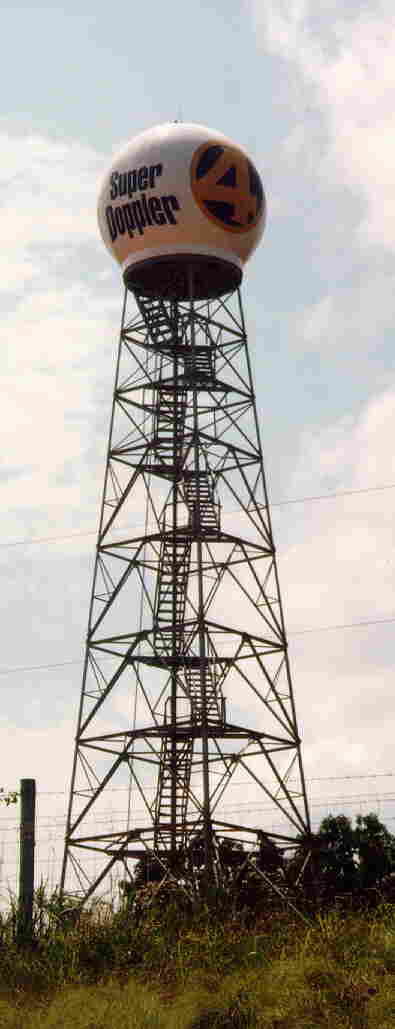
Super Doppler Tuesday


By Rhodes Cook


Ready or not, here it comes... Super-Duper Tuesday, Tsunami Tuesday, Monster Tuesday, or whatever name one chooses to call it. The huge, historic nationwide vote Feb. 5 is at last at hand. Two dozen states from Massachusetts to California will vote next Tuesday, electing more than 40 percent of all Democratic and Republican delegates in 2008.

The only other single-day event that has ever come close to this size during the presidential nominating process came on March 8, 1988, when the first full-blown Super Tuesday featured 16 primaries, actually one more than is scheduled next Tuesday. But that one-day votefest 20 years ago was a Southern-oriented event, rounded out by a handful of primaries in the Northeast and a smattering of low-visibility caucuses in the West.

This year's Super Tuesday, by contrast, is truly a nationwide event, the largest in scope ever held outside the November general election. It is vast and varied in virtually every way. Each region of the country is well represented. Red and blue states abound. Racial diversity is accented. Voter enthusiasm has rarely been higher, and turnout should be huge.
The half of the country that will vote Feb. 5 includes nearly 80 million registered voters. Most will have the opportunity to participate in primary elections, where turnout records have already been broken this year in a number of states. Lower-turnout caucuses will be held in a few small to medium-sized states west of the Mississippi River.


Figure 1. Super Tuesday: One Huge Delegate Harvest
More than 40 percent of all Democratic and Republican delegates will be elected to reflect the results of primaries and caucuses held on Super Tuesday (Feb. 5)--more to be selected in one day than the total elected in either the weeks before or the months afterward. Altogether, Democrats require 2,025 delegates to nominate; the Republicans, 1,191.
Delegates at Stake

ELECTED DELEGATES
Pre-Super Tuesday
Dems 137 3%
Reps 238 10%

Super Tuesday (Feb. 5)
Dems 1,681 42%
Reps 1,009 42%


Post-Super Tuesday
Dems 1,435 35%
Reps 980 41%

UNELECTED DELEGATES
Superdelegates
Dems 796 20%
Reps 153 6%


TOTAL DELEGATES
Dems 4,049
Reps 2,380


Source: Democratic National Committee's Office of Party Affairs and Delegate Selection (Jan. 5, 2008); Call for the 2008 Republican National Convention (Nov. 9, 2007).


Unlike 1988, no one part of the country will dominate next week's vote. Each region will have a say, with the West (with one-third of the Democratic and Republican delegates) and the Northeast (with roughly one-quarter) leading the way. Altogether, Super Tuesday will include at least five states from each region, anchored by the nation's first, third and fifth most populous states--California, New York, and Illinois, respectively.

The monster vote will require candidates to dip into both Red and Blue America in their hunt for delegates. The quintet of Southern primary states all voted decisively for President Bush in 2004. The five primary states in the Northeast were clear-cut in their support for John Kerry.
In the heartland, candidates will be tested in a collection of battleground states which nowadays are being described as purple, rather than red or blue. It is a group that on Super Tuesday will include Minnesota and Missouri in the Midwest and Arizona, Colorado and New Mexico in the Mountain West.


In the process, candidates will come face to face with the rich mosaic of racial and ethnic diversity that comprises the American electorate. Seven states voting Feb. 5 have populations at least 15 percent African American--four in the South, three in the industrial Frost Belt (including Hillary Clinton's home base of New York and Barack Obama's Illinois). Five states next Tuesday have populations 15 percent or more Hispanic--New York plus four Western states (California, Arizona, Colorado and New Mexico).


The sprawling nature of the Feb. 5 event will test the candidates' ability to draw votes under an array of different systems of voter participation, ranging from closed contests limited to party members only, to wide open primaries and caucuses where any registered voter of any political persuasion can participate. There are conspicuous examples of each that should show in stark form whether Obama and John McCain truly need the support of independents to successfully challenge Clinton and Mitt Romney, respectively, for their party's nominations.


In the South and Midwest, virtually all the primaries and caucuses on Super Tuesday will feature open voting. On the two coasts, though, there will be a greater emphasis on closed contests, which will be the case in New York, Connecticut, Arizona and for the Republicans, California. Conspicuously, California Democrats will allow independents (roughly 3 million) to participate in their primary, as will both parties in Massachusetts and New Jersey.


In short, Super Tuesday will test the candidates' organizational ability, campaign skills, and most importantly, their vote-getting appeal, in far-flung settings unique in their scope and variety.


The one area where the Democrats and Republicans operate on quite different playing fields is in the realm of awarding delegates. Democrats require that delegates be elected to proportionally reflect the primary or caucus vote, with 15 percent statewide or in a congressional district needed to qualify for a share. Republicans allow for a variety of delegate allocation methods, from proportional representation to winner-take-all. And next Tuesday, most states on the Republican side will be using some variation of winner-take-all.


Yet ultimately, the big question is whether either party will have a decisive outcome on Feb. 5 as the Republicans did on Super Tuesday 1988? Then, Vice President George H.W. Bush swept every primary and all but one caucus state, essentially wrapping up the GOP nomination right there.


Or might one or both parties next Tuesday have a fragmented outcome like the Democrats did in early March two decades ago? Michael Dukakis, Jesse Jackson and Al Gore each won five primary states that day and divided the delegates--an inconclusive result that sent the Democratic contest hurdling on for weeks to come.


Results will trickle in next Tuesday night much like they will do in November. Polls in Georgia are scheduled to close at 7 p.m. An hour later every primary state east of the Mississippi River except New York will begin reporting their results. Polls in the Empire State will close at 9 p.m. Arizona will begin reporting its results the same hour. Utah will follow at 10 p.m. Eastern time, California at 11.


Yet it will be not be in a primary or caucus where the first delegates of the day are chosen. It will be at a convention of West Virginia Republicans in Charleston, where roughly 1,500 delegates from around the state will convene at 9 a.m. in a setting resembling a national convention. Much like their counterparts at the national level, delegates will sit under their county signs, with a roll call vote of the state's 55 counties taking place in alphabetical order. It could take one, two or three ballots for one of the presidential candidates to win the majority of the vote that is necessary to capture the 18 national convention delegates at stake. State GOP officials hope to have a result to announce by early afternoon.


At the least, the West Virginia Republican convention will be the "Dixville Notch" of Super Tuesday, reporting its tally of delegates several hours before the rest of the country. But just maybe, the event could be something more--the precursor of the first multi-ballot national convention in more than a half century. Does the chance still exist for the Republicans to have such a protracted convention this summer, or even the Democrats? The full results from this largest of all primary and caucus days Feb. 5 could tell the tale.

Monday, February 4, 2008

A Gift


For those that read this before Wednesday and Thursday, I am pushing the due date for the book assignment to next Monday and Tuesday. I will be out of class later this week and won't be able to pick up the assignment.


You're welcome.
No Posts Allowed