I ached after watching this....
Happy Weekend!
Friday, October 9, 2009

Wednesday, October 7, 2009
Charlie Wilson's Peace?
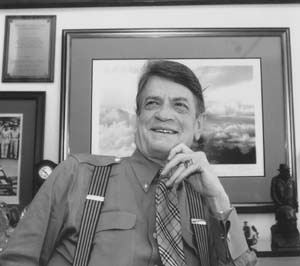
Hidden away in the Scranton Times-Tribune "Arts and Living" section Tuesday was a bombshell from former Democratic Representative of Texas Charlie Wilson.
The man whose adopted mission to save Afghanistan from the Soviet incursion in the 1980s spawned the notion of "Afghan freedom fighters," a book and a Hollywood movie (Charlie Wilson's War) now says we need to get the heck out of Dodge.
In an interview with the Pennsylvania paper, Wilson said he advocates a "calculated withdrawal" of American troops from the country, "rather than lose a lot of soldiers and treasure."
On the eight-year anniversary of the beginning of the war in Afghanistan and during the heated debate in Washington over whether President Obama should commit more American troops to the region, Wilson's words are incredibly significant. While many have argued recently that the war is unwinnable because Afghanistan is one of the most indomitable countries on the planet, hearing a passionate defender of the Afghan peoples' right to self-govern say we should pull out is starkly different from typical anti-war sentiment.
Wilson's reasoning is that we cannot beat the people we are fighting in Afghanistan:
"I'd rather take on a chain saw," Mr. Wilson said. "They're the world's best foot soldiers, best warriors. And they're fearless.
"They're fearless, and they've got nothing to lose. And they have a pretty serious hatred for those who try to occupy their country."
The thing is, he should know. After using his seat on the House of Representatives Appropriations Subcommittee on Defense to funnel funding through the CIA to supply Soviet-made weaponry to the mujahideen, who fought alongside Osama bin Laden among others, both the lawmaker and the country rejoiced in withdrawal of Soviet troops from the country in 1989.
But Wilson doesn't let himself or his government off the hook for their collective lack of investment in nation-building at the time. According to the article, Wilson credits the failure to set up Afghanistan with an adequate governing body as the reason for the 9/11 attacks and the past eight years of brutal fighting coalition troops have seen there:
"We (screwed) up the end game," Mr. Wilson said. "It would have been very easy and done for a minuscule amount of money. We should have done the basic things for a backward country that's trying to come out of (a war) and have a reasonable hope of economic success."
The Times-Tribune interview comes ahead of a talk Wilson is scheduled to give Thursday at the Scranton Cultural Center, as part of the Lackawanna County Library System's ongoing lecture series. Wilson, at age 76, has cut back on public appearances in recent years after a heart transplant.
Did Texas Knowingly Execute an Innocent Man?

Several members of a state commission investigating whether Texas executed a man based on a flawed arson investigation had urged Gov. Rick Perry not to replace the commission's chairman as a critical hearing approached.
But Perry did just that last week as part of a shakeup that could postpone the commission's findings in the case of Cameron Todd Willingham, whom Texas put to death in 2004 for killing his three children in a fire.
Critics have charged that Perry, by removing three of the nine members of the Forensic Science Commission days before it was to hear a critical report on the arson investigation in Willingham's case, was trying to delay the panel's inquiry into Willingham's case, perhaps until after he faces a challenge from U.S. Sen. Kay Bailey Hutchison in the March 2 Republican primary.
Last week, Perry aides told Austin defense lawyer Sam Bassett that the governor would not reappoint him to the commission. Since his term ended Sept. 1, Bassett was immediately replaced as the body's chairman by John Bradley, Williamson County's tough-on-crime district attorney. Two other commission members also learned they would not get new terms.
But in a Sept. 4 letter, commission member Sarah Kerrigan had urged Perry to keep Bassett at the helm. "Mr. Bassett has provided dedicated leadership to the commission during his two terms, and I recommend his reappointment under the strongest possible terms," Kerrigan wrote.
She did not mention the Willingham case in her letter, but she commended Bassett's leadership as the commission worked through a backlog of cases he inherited as chairman. She said Bassett's reappointment would "ensure a measure of stability to the commission during a time of great scrutiny."
Kerrigan, a forensic science professor at Sam Houston State University who was appointed to the commission by Attorney General Greg Abbott, could not be reached for comment Tuesday. Perry's office has offered little explanation for his decision not to reappoint Bassett.
"There are a number of things taken into consideration when selecting appointees to fill a position, including letters from concerned stakeholders," Perry spokeswoman Katherine Cesinger said Tuesday.
Alan Levy, who works in the Tarrant County district attorney's office, said Tuesday that he also had sent a letter urging Perry to retain Bassett as chairman.
Levy, like Bassett, learned recently from the governor's office that he would not be reappointed to the forensic panel.
"I thought the commission was at a critical stage," Levy said. Levy said he sent the letter Sept. 8 after Kerrigan told him Bassett was rumored to be in jeopardy. Perry's office did not respond, he said.
The Forensic Science Commission made international news in August when a fire scientist it hired, Craig Beyler, concluded the arson ruling that was key to Willingham's 1991 conviction was based on bad science, unproven theories and personal bias by arson investigators.
The evidence, Beyler said, did not support an arson finding — raising the prospect that Texas executed an innocent man.
Beyler was to address the commission Friday, but Bradley, the new chairman, canceled the meeting to familiarize himself with the agency's work, he said.
Time magazine reported Tuesday that Aliece Watts, a forensic expert from Fort Worth whom Perry also chose not to reappoint, also encouraged the governor to keep Bassett. And the state's leading association for defense lawyers asked Perry to keep Bassett.
Terms for each of the three commission members that Perry did not reappoint ended Sept. 1. But appointees regularly stay in their posts for months or years after their terms expire.
Asked last week about the timing of the shakeup, Perry said, "If you've got a whole new investigation going forward, it makes a lot more sense to put the new people in now and let them start the full process."
Obama: Exit is not an option

President Barack Obama told congressional leaders summoned to the White House on Tuesday that the options he is considering for Afghanistan do not include either a huge surge or a hasty exit, but instead fall in between, a senior administration official said.
“He said: There’s not a decision to double down in Afghanistan, nor is there a decision to leave,” the official said. “The president made clear that whatever decision he does make will not make everybody around that table happy, but that he is committed to this being a consultative process going forward.”
The official called the meeting “a chance for the president to identify what is an is not on the table.”
“And what is not on the table, in any sense, is leaving Afghanistan or so narrowly defining our mission as to be the equivalent of leaving Afghanistan,” the official continued.
“Similarly, there is no consideration of an option that would entail hundreds of thousands of American troops over a very extended period of time, which would be an all-in campaign that would go far above any beyond the resources that have been discussed.”
Obama told the lawmakers: “No one feels a greater sense of urgency than I do.”
“But the sense of urgency that he feels is to make the right decision, not to just make a decision,” the official added. “Almost everybody prefaced their comments by underscoring how important the decision is. So there was a very broadly constructive, supportive tone from members of both parties.”
The meeting included 31 lawmakers and lasted 1 hour 27 minutes. The group sat around a huge table in the State Dining Room, with Vice President Joe Biden sitting across from the president. At the table from the White House were National Security Adviser James Jones, Deputy National Security Adviser Tom Donilon and John Brennan, assistant to the president for homeland security and counterterrorism.
The president sat in the middle of the table, flanked by House Speaker Nancy Pelosi (D-Calif.) and Senate Majority Leader Harry Reid (D-Nev.), with House Minority Leader John Boehner (R-Ohio) next to Pelosi and Senate Minority Leader Mitch McConnell (R-Ky.) next to Reid.
From there, the lawmakers were paired by committees.
No congressional staff attended.
“He found the discussion very useful and constructive, because it was a chance to have a dialogue and to establish what he hopes will be a very open and consultative process with Congress going forward,” the official said. “He was satisfied that the meeting accomplished what he intended.”
The official said that every lawmaker had a chance to talk, so Obama spent more time listening than talking. Some gave very specific advice.
“The president was not engaging in a debate about specific resource determinations,” the official said. “He made it clear that he’s focused on establishing the strategy that will achieve our goals of defeating al Qaeda and protecting America and our allies from attack. He’s focused on getting that strategy right.”
Obama told the lawmakers that he wanted to have “mechanisms for regular contact between our administration and the Congress, and that he had an open line to those members who wanted to reach out to him with their ideas or concerns,” the official said.
“We did hear a broad spectrum of opinion,” the official added. “Some of it touched on assessment, some of it touched on strategy, some of it touched on resources.”
Tuesday, October 6, 2009
Protests Mark Eighth Year of War

A small group of protesters gathered outside the White House gates Monday to mark the eighth anniversary of the U.S. invasion of Afghanistan, which occurs on Wednesday. The group held up signs calling for the United States to stop torture, bring the troops home and get out of Iraq and Afghanistan.
The demonstration came as President Barack Obama grapples with a decision to approve sending as many as 40,000 more U.S. troops to Afghanistan. His own advisers are divided on the issue, with Gen. Stanley McChrystal, commander of U.S. forces in the country, warning that the U.S. and NATO mission there could fail without additional forces.
Other senior U.S. officials, including Vice President Joe Biden and many members of Congress, have questioned the wisdom of surging forces in Afghanistan, with some suggesting that reducing the number of troops and narrowing their focus on capturing or killing Osama bin Laden and training Afghan soldiers and police are more appropriate.
White House officials say that a decision on a troop buildup is just weeks away. On Tuesday, Obama is scheduled to meet at the White House with the Republican and Democratic House and Senate leadership, as well as relevant committee chairpersons and other ranking members, to discuss Afghanistan.
At Monday’s demonstration, timed to coincide with a health care reform event the president was hosting, speakers shouted through a bullhorn, and their chants could be heard as Obama spoke in the Rose Garden. At least 40 of the protesters were arrested, and others blocked the northwest gate of the White House, shutting it down for hours.
Since the U.S. invasion of Afghanistan in 2001, 1,444 coalition troops have been killed, including 869 U.S. soldiers, 219 British troops and 131 Canadian troops, according to iCasualties.org. The period from July through September of this year was by far the deadliest three months since the conflict began, with 223 coalition fatalities, iCasualties reported.
Wow...I can't believe it's been 8 years.
Monday, October 5, 2009
You and SCOTUS Decide

The Supreme Court will hear two cases from Florida next term dealing with minors sentenced to life in prison for committing crimes other than murder.
In Graham v. Florida, a judge sentenced then-17-year-old Terrance Graham to life without parole in 2004 after he took part in an armed home invasion while he was on probation for committing a separate violent crime.
Evidence was presented during his trial concerning the robbery, but the trial judge sent Graham to prison for violating the terms of his probation after an earlier conviction for armed burglary and attempted armed robbery when he was 16.
Meanwhile, in Sullivan v. Florida, then-13-year-old Joe Harris Sullivan was sentenced to life in prison without parole after being convicted for the rape of an elderly woman.
In 1989, Sullivan and two older teens burglarized the home of Lena Bruner, who was not home at the time. Someone returned to her house later that day and beat and raped her.
The two older teenagers admitted to the earlier burglary but said Sullivan committed the rape. He was convicted in a one-day trial in which Bruner testified that she’d been blindfolded during the assault but that she could recognize her attacker’s voice.
At trial, Sullivan had to repeat certain phrases used by the attacker while Bruner was asked whether she recognized his voice.
Police collected biological evidence at the crime scene but it was destroyed before it could be subjected to DNA testing, according to the brief filed by Sullivan’s attorney, Bryan Stevenson of the Equal Justice Initiative.
The Florida district court of appeal affirmed the conviction without opinion and the Supreme Court of Florida denied review without opinion.
Attorneys for both men contend that since their clients’ crimes didn’t involve murder, a life sentence without parole violates the Eighth Amendment’s ban on cruel and unusual punishment.
Stevenson noted in his brief that his client was one of only two 13-year-old children sentenced to life without parole for a non-homicide crime in the United States and only one of eight with that sentence for any crime in prison.
"This court has recognized that the Eighth Amendment requires the states to treat juveniles differently than adults, at least in the context of the death penalty," attorney John Mills wrote in his brief to the court on Graham's behalf. "This is so because, given the difference between juveniles and adults, juveniles have a greater claim to be forgiven for their criminal misbehavior."
In the 2005 case, Roper v. Simmons, the Supreme Court outlawed the death penalty for juvenile offenders, citing a "national consensus" against the practice, along with medical and other evidence that teenagers are too immature to be held accountable for their crimes to the same extent as adults.
In urging the court not to hear the case, Florida Attorney General Bill McCollum argued that in the past the justices have “recognized that a state is permitted to make ‘a societal decision that when a person who has previously committed a felony commits yet another felony, he should be subjected to the admittedly serious penalty of incarceration for life, subject only to the state's judgment as to whether to grant him parole.’”
On May 4, 2009, the Supreme Court agreed to hear the cases, which will be argued separately during the fall term that begins on Oct. 5.
Question presented:
Graham:
Issue: Whether the Eighth Amendment’s ban on cruel and unusual punishments prohibits the imprisonment of a juvenile for life without the possibility of parole as punishment for the juvenile’s commission of non-homicide.
Sullivan:
Issue: Does imposition of a life without parole sentence on a thirteen-year-old for a non-homicide violate the prohibition on cruel and unusual punishments under the Eighth and Fourteenth Amendments, where the freakishly rare imposition of such a sentence reflects a national consensus on the reduced criminal culpability of children?
Wednesday, September 23, 2009
Welcome to the 3rd Floor

Welcome to the 3rd Floor! Now that you are here...a bit of bureaucracy.
We covered most of this in class but here are the steps you need to take to comment on a blog.
1) You must first create a username and password.
2) To create this, go to a blog and click on comment.
3) You will then click on "Sign Up Here" next to No Google Account?
4) Your user name will be your FIRST and LAST name along with your CLASS PERIOD #
5) When you comment, it will not show up until I approve it.
Remember, this is a forum for us to communicate on topics of the day. We do not have to agree with each others comments...but your comments must be in line with the student code of conduct that you all signed.
Have fun and welcome!
Subscribe to:
Comments (Atom)