How many of these can Rick Perry afford?
Thursday, November 10, 2011
Tuesday, November 8, 2011
Dave Matthews Band f/ Warren Haynes - Cortez the Killer (Neil Young Co...
Tuesday Pick Me Up
Two of my favs playing another one of my favs
Two of my favs playing another one of my favs

Election Day
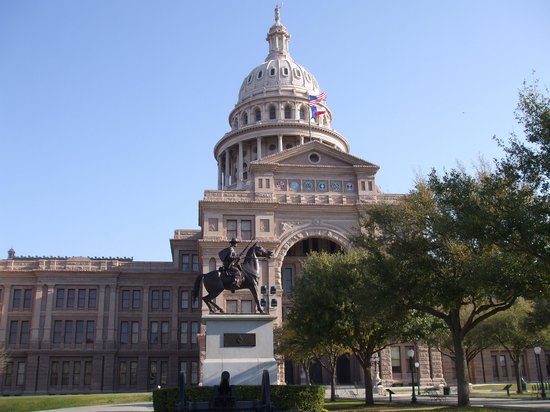
AUSTIN, Texas — Texas voters are being asked to approve 10 constitutional amendments on Tuesday, including plans that would allow government agencies to raise billions of more dollars and provide tax breaks for conservation, college students and the spouses of disabled veterans.
Attracting the most attention on the ballot is Proposition 2, which would enable the state to create a revolving $6 billion bond package to finance water conservation, and sewage and flood-control projects.
Supporters, including The Nature Conservancy and some in the oil and gas industry, said the increased bonding authority for the Texas Water Development Board is necessary to update water utilities and to pay for the state water plan.
"The availability of water is an issue that cuts across every district and impacts every citizen," Texas House Speaker Joe Straus said. "Proposition 2 allows Texas to address critical improvements to local water and wastewater systems, from new water towers and transmission lines, to improved conservation efforts."
But critics argue that Proposition 2, along with the other bonding plans — Propositions 3, 4 and 7 — would increase government spending by granting permanent permission for various entities to issue more bond debt.
"It is a poor way to manage the state's debt load. We are committing to $6 billion in debt forever," said Michael Quinn Sullivan, president of Texans for Fiscal Responsibility. "Twenty years from now, we may really wish we had the permanent water debt or the permanent scholarship loan debt for something more pressing."
Proposition 3 would allow the Higher Education Coordinating Board to issue bonds that would fund low-interest student loans. Supporters argue that the plan is necessary because budget cuts to financial aid programs at the state and federal level will likely increase the demand for fixed-rate loans.
Under Proposition 4, Texas counties would be given the same authority that cities and towns have to issue bonds to finance the development of unproductive, underdeveloped or blighted areas, while pledging repayment with property tax revenues. Critics argue that the amendment would expand transportation reinvestment zones to counties, which could clear the way for new toll roads.
Although the amendment does not allow for higher property tax rates, opponents warn that taxpayers could still face higher taxes in the form of increased appraisals to pay for the development.
Proposition 7 would allow El Paso County to use property taxes from newly created conservation and reclamation districts to develop and maintain parks and recreation facilities.
If Proposition 8 were approved, property owners could opt out of agricultural or wildlife conservation exemptions — which could be a less cost-effective use of land during a drought — and instead get the water conservation tax exemption, said Laura Huffman, state director of the Texas Nature Conservancy. The group helped write and push the proposed amendment through the Legislature.
The proposal has been hailed as one of the few measures approved by the Legislature last session that received bipartisan support almost every step of the way despite an increasingly acrimonious political environment that has largely divided lawmakers along party lines.
Proposition 1 would allow the surviving spouses of all disabled veterans to continue claiming an exemption from state property tax after the veteran dies. Right now, a widow or widower must resume paying the property tax after her or his disabled spouse dies.
Public schools could get more money from the state's Permanent School Fund, if Proposition 6 is approved. It seeks to recalculate the formula by which funds from the endowment are distributed, which could increase the amount going to school districts.
Other proposed amendments include Proposition 5, which would authorize the Legislature to allow cities and counties to enter into contracts with other cities and counties without triggering a property tax.
Proposition 9 would allow the Texas governor to grant a pardon, reprieve or commutation of punishment to a person who completes a sentence of deferred adjudication. The records could only be cleared on the written recommendation and advice of the Board of Pardons and Paroles.
Under Proposition 10, local elected officeholders would get an extra 30 days before triggering automatic resignation if they become a candidate for another office.
Two weeks of early voting ended Friday. The state reported a 2 percent turnout in Texas' 15 largest counties, compared to 20 percent in the 2010 general election.
Rewrite the 22nd Amendment?

Former president Bill Clinton said Tuesday that presidents should be able to run for a third term so long as they take off some time after their second term.
“I’ve always thought that should be the rule,” he said on MSNBC’s Morning Joe. “”Not to affect me, but [for] anyone else going forward.”
Clinton made the remark in the context of a question posed by former Republican Congressman and show co-host Joe Scarborough, who said that many wished that he could run again.
Scarborough cited former British Prime Minister Winston Churchill, who led his country during World War II and then again in the 1950s, as an example.
The two-term limit for the presidency is mandated by the 22nd Amendment to the Constitution, which was ratified after Franklin D. Roosevelt won four consecutive terms in the 1930s and 1940s.
Earlier in the morning, Clinton said that he does not spend time thinking about whether the country would be better off under the leadership of his wife, Hillary Clinton.
“I don’t think about it,” said Clinton, on NBC’s Today Show. “I deal with the world as it is. I think [Obama’s] done a better job than he’s getting credit for.”
Clinton was on the early morning shows Tuesday to promote his new book, “Back to Work.”
SCOTUS Looks at GPS and Law Enforcement

WASHINGTON—The Supreme Court is considering whether police use of GPS devices to track criminal suspects requires a judge's advance approval.
The case being argued Tuesday could have implications for other high-tech surveillance techniques in the digital age.
The Obama administration is appealing a ruling that threw out the drug conspiracy conviction of Antoine Jones of Washington because FBI agents and local police installed a GPS device on Jones' car and collected travel information without a search warrant.
The government argues that people have no expectation of privacy concerning their travel on public streets.
The GPS device helped authorities link Jones to a suburban house used to stash money and drugs. He was convicted and sentenced to life in prison before the federal appeals court in Washington overturned the conviction.
The appellate judges said the authorities should have had a warrant and pointed to the length of the surveillance -- a month -- as a factor in their decision.
An unusual array of interest groups backs Jones, including the Gun Owners of America, the Council on American-Islamic Relations, the American Civil Liberties Union and an association of truck drivers. The groups say GPS technology is much more powerful than the beeper technology police once employed in surveillance.
But the Justice Department says the GPS device is no different from a beeper authorities used, with the high court's blessing in 1983, to help track a suspect to his drug lab. The court said then that people on public roads have no reasonable expectation of privacy.
The Justice Department said GPS devices are especially useful in early stages of an investigation, when they can eliminate the use of time-consuming stakeouts as officers seek to gather evidence.
Other appeals courts have ruled that search warrants aren't necessary for GPS tracking.
The justices will be considering two related issues, whether a warrant is needed before installing the device or using the GPS technology to track a vehicle.
Thursday, November 3, 2011
Cain Says Perry Behind Harrassment Leak
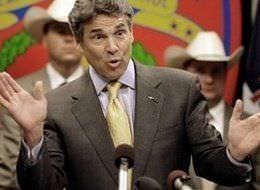
Was the recent attack on Herman Cain’s presidential campaign a professional hit job? Absolutely, says Herman Cain. And he says he knows just where to look for the guy who did it: At 815 Slaters Lane in Alexandria, Virginia, a low-slung former warehouse in the shadow of a coal plant.
There, beside rusting rail lines, is the home of OnMessage Inc., a Republican-leaning consulting firm recently hired to bolster Texas Gov. Rick Perry’s presidential campaign.
One of the firm’s partners, Curt Anderson, worked on Cain’s losing 2004 U.S. Senate campaign. Cain thinks he’s the hired political gun who leaked details to Politico, a Washington trade publication, of alleged “sexually suggestive behavior” Cain is said to have exhibited towards two women while he ran the National Restaurant Association in the 1990s. That story set off a media frenzy which has quickly put Cain’s campaign on the defense.
In the summer of 2003, Cain recalls briefing Anderson—his general campaign consultant at the time—that sexual harassment claims were brought against him while he was chairman of the National Restaurant Association from 1996 to 1999.
“I told my wife about this in 1999 and I’ve got nothing to hide,” Cain told me Wednesday. “When I sat down with my general campaign consultant Curt Anderson in a private room in our campaign offices in 2003 we discussed opposition research on me. It was a typical campaign conversation. I told him that there was only one case, one set of charges, one woman while I was at the National Restaurant Association. Those charges were baseless, but I thought he needed to know about them. I don’t recall anyone else being in the room when I told him.”
Curt Anderson phoned me to say “I never heard about this story until I read about it in Politico. I have nothing but good things to say about Herman Cain. I’m not going to bad-mouth Herman Cain to anyone, on or off the record. I think he is a guy of great leadership and integrity.”
Perry spokesman Ray Sullivan said it was “patently untrue” that the Perry campaign had any role in placing the sexual harassment story with Politico.
Aside from knowing about the alleged sexual harassment accusations, Cain campaign officials point to the timing of Anderson’s hiring by Perry as evidence of his involvement. The campaign announced Anderson’s role on October 24, just a week before Politico broke the story.
Does he regret telling Anderson about it? “I don’t regret it at all,” Cain says. “The guy who was supposed to help with strategy should know everything. I put it on the table right from the get go. I wasn’t trying to hide it.”
Perhaps Cain should have known better. Throughout his career, Anderson, a well-known consultant in Washington, has worked for a slew of campaigns, including Gov. Mitt Romney in 2008. He also contributes to Politico a few times per year. In an August 2011 column, he chided conservatives and “Republican elites” for what he called “Perryphobia.” And he wasn’t officially working for the Perry campaign yet.
Of course, Washington being Washington, there are other links between the Perry campaign and Cain’s failed Senate bid. The pollster for the Cain U.S. Senate campaign was Tony Fabrizo, who now also works for Gov. Perry.
Fabrizo and the OnMessage team worked together on Florida governor Rick Scott’s insurgent campaign and other campaigns. Fabrizo failed to return phone calls.
So did Politico get the story from Anderson and the Perry camp? When CNN’s Anderson Cooper asked Poltico’s editor-in-chief John Harris if his publication was “tipped off by a rival campaign” Harris chuckled, passed, and referred to a similar question Cooper had asked Politico’s Jonathan Martin the night before. “Jonathan was on message last night and I will try to stay on message,” Harris said.
Asked about the “on message” reference, Harris told me: “There was no code or inside joke. We are simply telling our reporters to stick to published story.”
As for the story itself, Cain campaign officials complain Politico’s piece was an ambush. When Politico’s Martin contacted Cain campaign spokesman J.D. Gordon on late in the day on October 19, Gordon says Martin didn’t supply any details or documents that would allow the campaign to evaluate the claims. There were no names, locations, or exact descriptions of what Cain is alleged to have said or done. Gordon and the campaign say they couldn’t respond because they had no idea what they were responding to. Gordon even begged Harris to send him copies of any documents with the names blacked out. Harris refused.
Politico’s published piece is equally vague on what happened, saying only that:
“On the details of Cain’s allegedly inappropriate behavior with the two women, POLITICO has a half-dozen sources shedding light on different aspects of the complaints.
The sources — including the recollections of close associates and other documentation — describe episodes that left the women upset and offended. These incidents include conversations allegedly filled with innuendo or personal questions of a sexually suggestive nature, taking place at hotels during conferences, at other officially sanctioned restaurant association events and at the association’s offices. There were also descriptions of physical gestures that were not overtly sexual but that made women who experienced or witnessed them uncomfortable and that they regarded as improper in a professional relationship."
Indeed, no one—the two women, the National Restaurant Association board member that Politico cites as its source, Politico itself, one of the aggrieved women’s attorney Joel Bennett, the National Restaurant Association itself—has supplied any concrete details of alleged harassment.
Washington attorney Joel P. Bennett, who represents one of the two women who claim that Cain mistreated her, doesn’t have a copy of agreements the women signed with the National Restaurant Association. “I haven’t seen a copy of this in 12 years,” he told me, adding that he hopes to get a copy from the National Restaurant Association. His client asked him to stop giving interviews. In the past 24 hours, he said, he had appeared on NBC, CBS, NYT and NPR.
The National Restaurant Association spokesperson, Sue Hensley, said that the association is bound by confidentiality agreements and employee-privacy regulations and cannot release any documents or comment in any way.
The Cain campaign, and even Cain himself, begged the association to at least supply some details, campaign officials say. Citing the confidentiality agreements, the association refused.
So Cain and the public are left boxing against shadows. And Cain is no longer on message. “Let’s just say that we would never do something like this,” Cain says. “It gives politics a bad name.”
There, beside rusting rail lines, is the home of OnMessage Inc., a Republican-leaning consulting firm recently hired to bolster Texas Gov. Rick Perry’s presidential campaign.
One of the firm’s partners, Curt Anderson, worked on Cain’s losing 2004 U.S. Senate campaign. Cain thinks he’s the hired political gun who leaked details to Politico, a Washington trade publication, of alleged “sexually suggestive behavior” Cain is said to have exhibited towards two women while he ran the National Restaurant Association in the 1990s. That story set off a media frenzy which has quickly put Cain’s campaign on the defense.
In the summer of 2003, Cain recalls briefing Anderson—his general campaign consultant at the time—that sexual harassment claims were brought against him while he was chairman of the National Restaurant Association from 1996 to 1999.
“I told my wife about this in 1999 and I’ve got nothing to hide,” Cain told me Wednesday. “When I sat down with my general campaign consultant Curt Anderson in a private room in our campaign offices in 2003 we discussed opposition research on me. It was a typical campaign conversation. I told him that there was only one case, one set of charges, one woman while I was at the National Restaurant Association. Those charges were baseless, but I thought he needed to know about them. I don’t recall anyone else being in the room when I told him.”
Curt Anderson phoned me to say “I never heard about this story until I read about it in Politico. I have nothing but good things to say about Herman Cain. I’m not going to bad-mouth Herman Cain to anyone, on or off the record. I think he is a guy of great leadership and integrity.”
Perry spokesman Ray Sullivan said it was “patently untrue” that the Perry campaign had any role in placing the sexual harassment story with Politico.
Aside from knowing about the alleged sexual harassment accusations, Cain campaign officials point to the timing of Anderson’s hiring by Perry as evidence of his involvement. The campaign announced Anderson’s role on October 24, just a week before Politico broke the story.
Does he regret telling Anderson about it? “I don’t regret it at all,” Cain says. “The guy who was supposed to help with strategy should know everything. I put it on the table right from the get go. I wasn’t trying to hide it.”
Perhaps Cain should have known better. Throughout his career, Anderson, a well-known consultant in Washington, has worked for a slew of campaigns, including Gov. Mitt Romney in 2008. He also contributes to Politico a few times per year. In an August 2011 column, he chided conservatives and “Republican elites” for what he called “Perryphobia.” And he wasn’t officially working for the Perry campaign yet.
Of course, Washington being Washington, there are other links between the Perry campaign and Cain’s failed Senate bid. The pollster for the Cain U.S. Senate campaign was Tony Fabrizo, who now also works for Gov. Perry.
Fabrizo and the OnMessage team worked together on Florida governor Rick Scott’s insurgent campaign and other campaigns. Fabrizo failed to return phone calls.
So did Politico get the story from Anderson and the Perry camp? When CNN’s Anderson Cooper asked Poltico’s editor-in-chief John Harris if his publication was “tipped off by a rival campaign” Harris chuckled, passed, and referred to a similar question Cooper had asked Politico’s Jonathan Martin the night before. “Jonathan was on message last night and I will try to stay on message,” Harris said.
Asked about the “on message” reference, Harris told me: “There was no code or inside joke. We are simply telling our reporters to stick to published story.”
As for the story itself, Cain campaign officials complain Politico’s piece was an ambush. When Politico’s Martin contacted Cain campaign spokesman J.D. Gordon on late in the day on October 19, Gordon says Martin didn’t supply any details or documents that would allow the campaign to evaluate the claims. There were no names, locations, or exact descriptions of what Cain is alleged to have said or done. Gordon and the campaign say they couldn’t respond because they had no idea what they were responding to. Gordon even begged Harris to send him copies of any documents with the names blacked out. Harris refused.
Politico’s published piece is equally vague on what happened, saying only that:
“On the details of Cain’s allegedly inappropriate behavior with the two women, POLITICO has a half-dozen sources shedding light on different aspects of the complaints.
The sources — including the recollections of close associates and other documentation — describe episodes that left the women upset and offended. These incidents include conversations allegedly filled with innuendo or personal questions of a sexually suggestive nature, taking place at hotels during conferences, at other officially sanctioned restaurant association events and at the association’s offices. There were also descriptions of physical gestures that were not overtly sexual but that made women who experienced or witnessed them uncomfortable and that they regarded as improper in a professional relationship."
Indeed, no one—the two women, the National Restaurant Association board member that Politico cites as its source, Politico itself, one of the aggrieved women’s attorney Joel Bennett, the National Restaurant Association itself—has supplied any concrete details of alleged harassment.
Washington attorney Joel P. Bennett, who represents one of the two women who claim that Cain mistreated her, doesn’t have a copy of agreements the women signed with the National Restaurant Association. “I haven’t seen a copy of this in 12 years,” he told me, adding that he hopes to get a copy from the National Restaurant Association. His client asked him to stop giving interviews. In the past 24 hours, he said, he had appeared on NBC, CBS, NYT and NPR.
The National Restaurant Association spokesperson, Sue Hensley, said that the association is bound by confidentiality agreements and employee-privacy regulations and cannot release any documents or comment in any way.
The Cain campaign, and even Cain himself, begged the association to at least supply some details, campaign officials say. Citing the confidentiality agreements, the association refused.
So Cain and the public are left boxing against shadows. And Cain is no longer on message. “Let’s just say that we would never do something like this,” Cain says. “It gives politics a bad name.”
Monday, October 31, 2011
Subscribe to:
Comments (Atom)